Ways, changing reels and cascading outcomes
Ways-based games evaluate qualifying symbol combinations under their own matching rules rather than asking the player to follow a fixed drawn line. The Mega-ways collection on Zora.bet provides a separate browsing route for games using changing reel configurations. Read the exact rules for the chosen release because the collection label does not specify every feature, payout or reel behaviour of every title within it.
Cascading or tumbling games can remove winning symbols and introduce replacements within the same paid round. Distinguish that continuation from a newly purchased spin when reading the game history. A sequence may contain several evaluations, yet it still needs to be understood through the original stake and the game's defined multiplier rules. Visual activity alone is not a reliable measure of how much has been won.
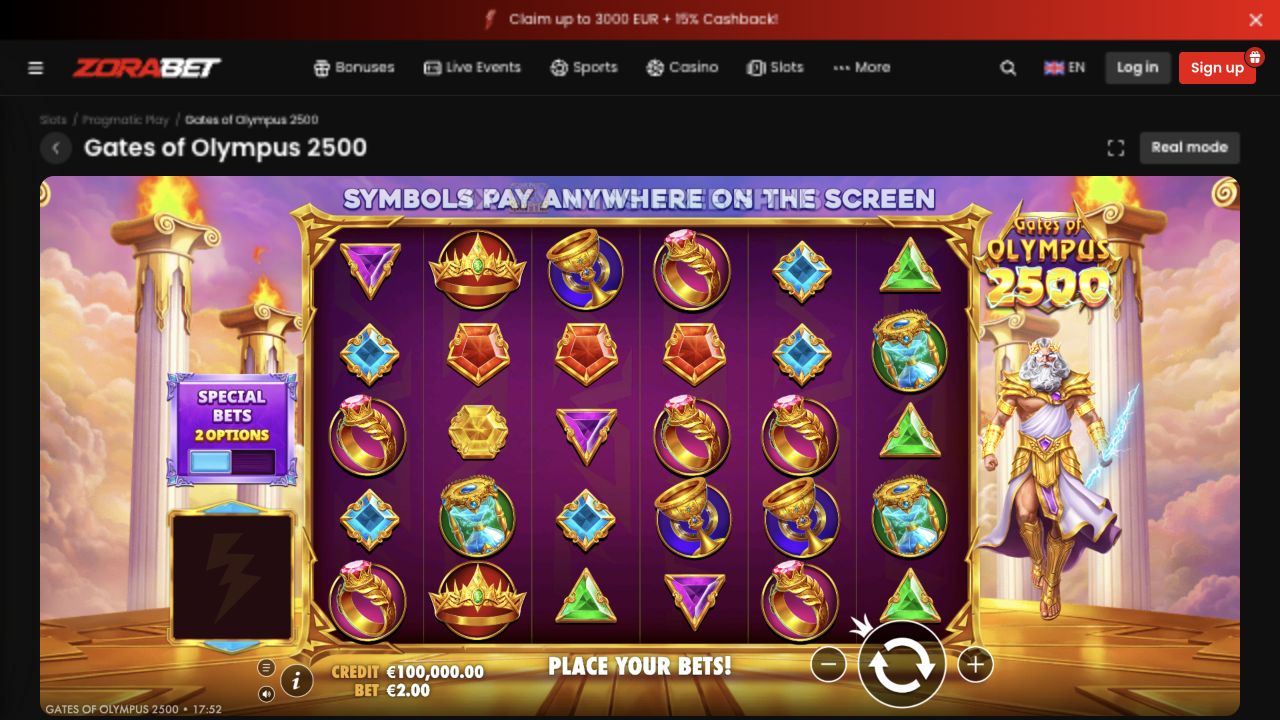
Sweet Bonanza 1000 and Gates of Olympus 1000 are recognisable modern examples to inspect by exact title. Open the provider's rules within the game to see how symbols, multipliers and bonus features operate in that version. Do not transfer an RTP figure or bonus description from a similarly named earlier release. The title, version and configuration shown in the actual session are the relevant reference.
Practical application
Use the round history to identify the boundary between one paid spin and the next. Several symbol removals inside a cascade can belong to one original stake. Count a new payment only when the game records a new stake; an animation transition alone does not establish another charge or an extra cash prize.
Separate win evaluation from continuation
Ways, clusters and cascades describe different aspects of a game. A ways rule determines which symbol combinations qualify; a cascade describes how a round can continue after an evaluation. A title can combine mechanics, but one label does not imply the others. Read the rule governing the initial win before studying what happens to symbols afterward.
This distinction prevents an attractive sequence of falling symbols from being described as several free spins. The game must define whether the continuation belongs to the original paid round, a feature allocation or another mode. The animation alone cannot supply that accounting boundary.
Follow the result through its component amounts
Imagine a purely illustrative round showing component wins of €0.30, €0.20 and €0.50 before displaying a final total of €1. The final €1 already represents their sum. Adding all four labels would incorrectly report €2. If the interface instead displays a running total after each step, even the first three labels should not be summed without reading their meaning.
A multiplier adds another question: does it apply to one component, the accumulated amount or a feature result? Use the title's explanation. A 3× icon visible somewhere in the sequence does not justify multiplying every amount on the screen by three.
Keep mode changes out of a same-round comparison
A feature can alter the rules used during part of the game. Record when that mode starts and what happens to any counter when it finishes. Do not assume that a multiplier carries into the next ordinary spin or that a new feature inherits a previous feature's settings. The reset rule is part of the specific title's instructions.
Sweet Bonanza is a recognisable Pragmatic Play title in the observed public catalogue. A similarly named 1000 edition must still be identified independently. A description or screenshot for one version should not be presented as evidence of the other's active settings.
Use history to distinguish progress from payment
A useful round history identifies the initial charge and final credit, with any intermediate states explained as components of that round. If a sequence is interrupted, use the identifier to determine whether its result was already recorded. Reopening the game can change the animation shown without creating a new financial result.
For a comparison note, write one sentence describing the chain: paid start, qualifying evaluation, continuation, any feature transition and final settlement. If a step is unknown, label it rather than inventing a rule from another cascading game. This produces a more useful guide than counting the number of visual effects.